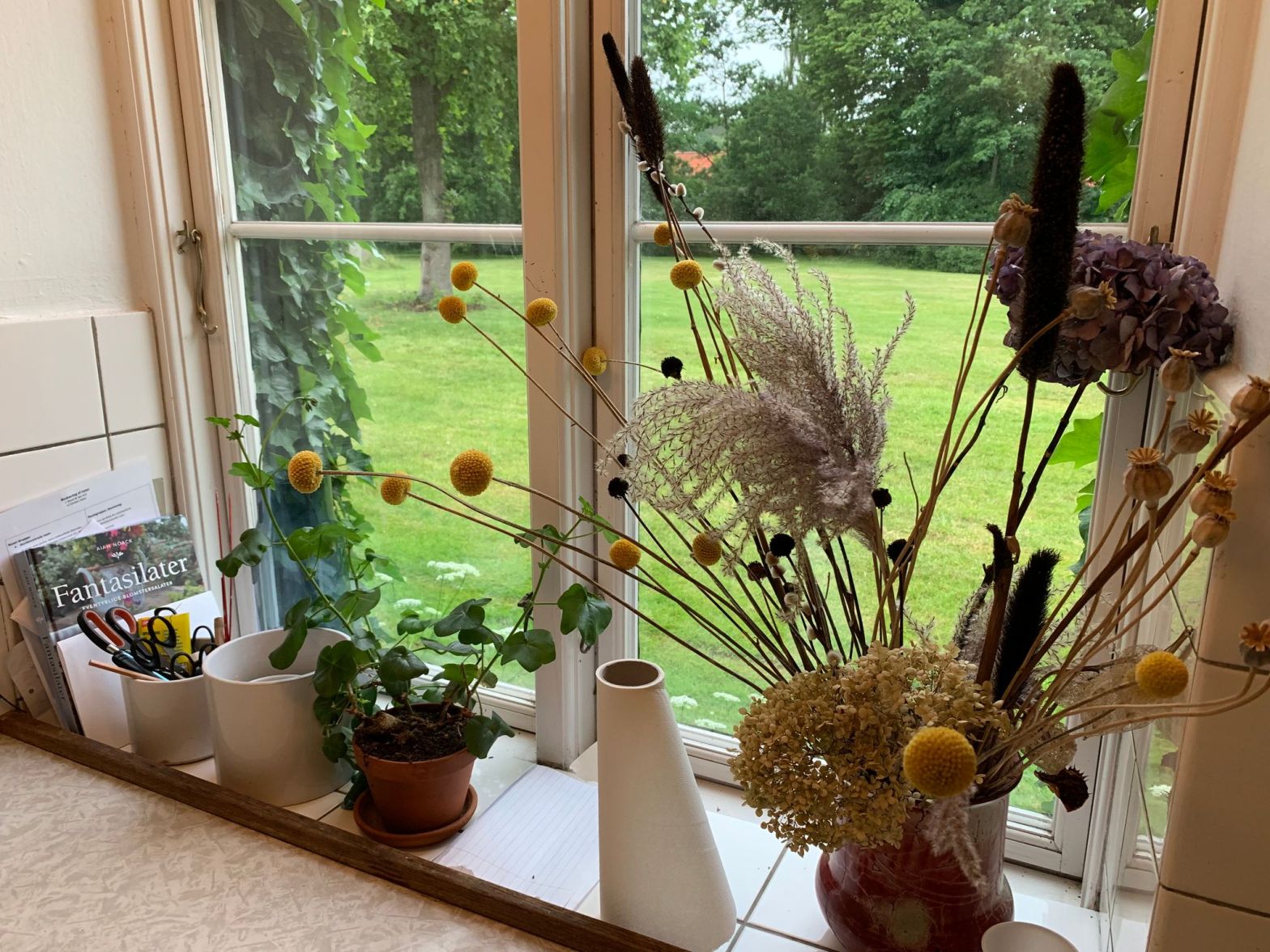
The Danish word hygge is a defining cultural characteristic, it’s a mood and it’s a state of mind. It doesn’t have an equal in English, but means something like a coziness that creates a feeling of contentment or well-being. Like many Danish words, English speakers get it wrong. It’s pronounced like: ‘huh-gah’; or just watch this video. Many cultures have words that define them. In Turkey it’s hüzün, a sense of melancholy that surviving a rainy Istanbul winter gives you, and in Portugal it’s saudade, a sense of loss and longing that losing too many men at sea gives you. But hygge is the opposite of these words. Hygge is a happy word and the search for hygge is a very Danish trait.
I knew about hygge before I went to Denmark. Friends had told me that I’d see candles in all the windows, that everything would be super cute. And I did see it everywhere on my recent trip— burning candles at every meal, eating a piece of herring on rye with a shot of aqvavit as a toast , a red thatched-roof house with foxgloves and roses in the garden, listening to a summer thunderstorm while I reading a book in bed, the tiny summer cottages that dotted the coastline near the fishing village of Gilleleje, in North Zealand, where I was staying. I found hygge all around me in Denmark.
My Danish friend Sif explained to me that the best example of hygge is a Christmas celebration with its perfect orchestration of food, drink, candles and family and friends enjoying each other’s company.
“So, it’s perfection?” I asked.
“No,” she said, “hygge isn’t always perfect. Sometimes my boyfriend and I will go out with friends and the evening is just so-so but we’ll say to each other ‘it was still hyggeligt.’”
“Does it always require other people?”
“No, you could hygge dig, or cozy yourself, with a book and a glass of wine.”
I began to wonder if hygge was more than just putting a candle in a window. I began to wonder if hygge was a state-of-mind, a quest— trying to find beauty in little things around you. And if the search for hygge is what makes the Danes among the happiest people in the world, according to many international surveys? It is clear that universal and free healthcare, free education and generous unemployment benefits create a safety net that promotes Danish happiness. But Meik Wiking, CEO at the Happiness Research Institute in Copenhagen, author of The Little Book of Hygge: The Danish art of living well, argues that hygge plays a role in happiness as well. Hygge is about feeling safe, he claims, hygge is about feeling gratitude to what life offers you, hygge is about savoring life’s moments. All of these things contribute to overall happiness.
As I wandered around the village of Gilleleje I began to wonder if I took the quest for hygge with me maybe I would never lose the magic of Denmark. That if I continued on this quest to see the beauty around me, in the small moments, in the tiny scenes, that somehow I could export some of Danish happiness with me. When I arrived back home in Seattle I found a tiny nautilus shell, a gold speckled stone, and a tiny clamshell that I had picked up on the beach in Gilleleje on my last day. Now they sit on my shelf as a reminder of the beauty of Denmark and the importance of finding hygge.
 Mark Lammers